
St. Kitts and Nevis enters New Space through historic life sciences mission with Switzerland
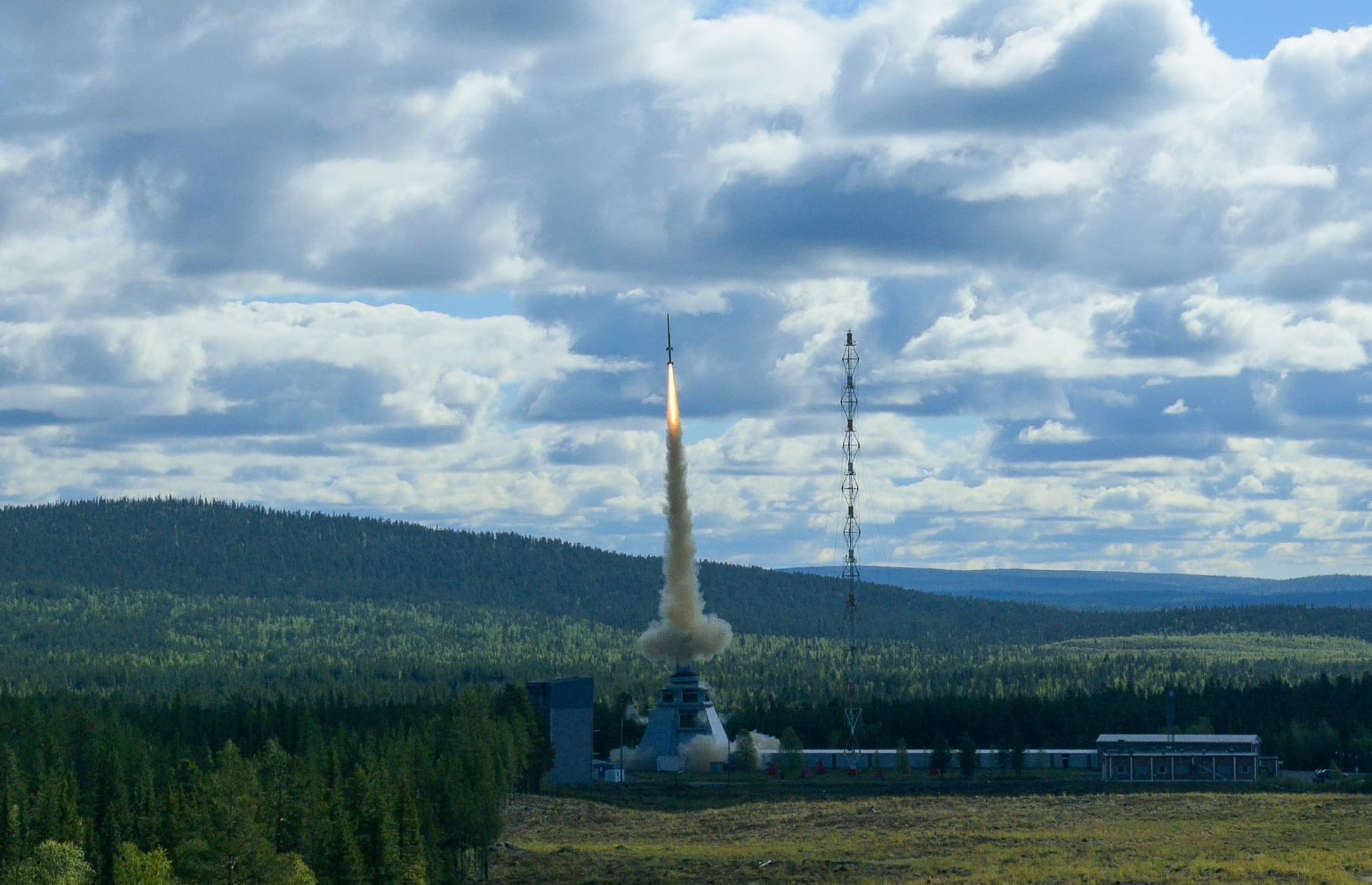
Launch of the suborbital mission S1X-5 / M17 from Esrange Space Center, Sweden (source: SSC Space)
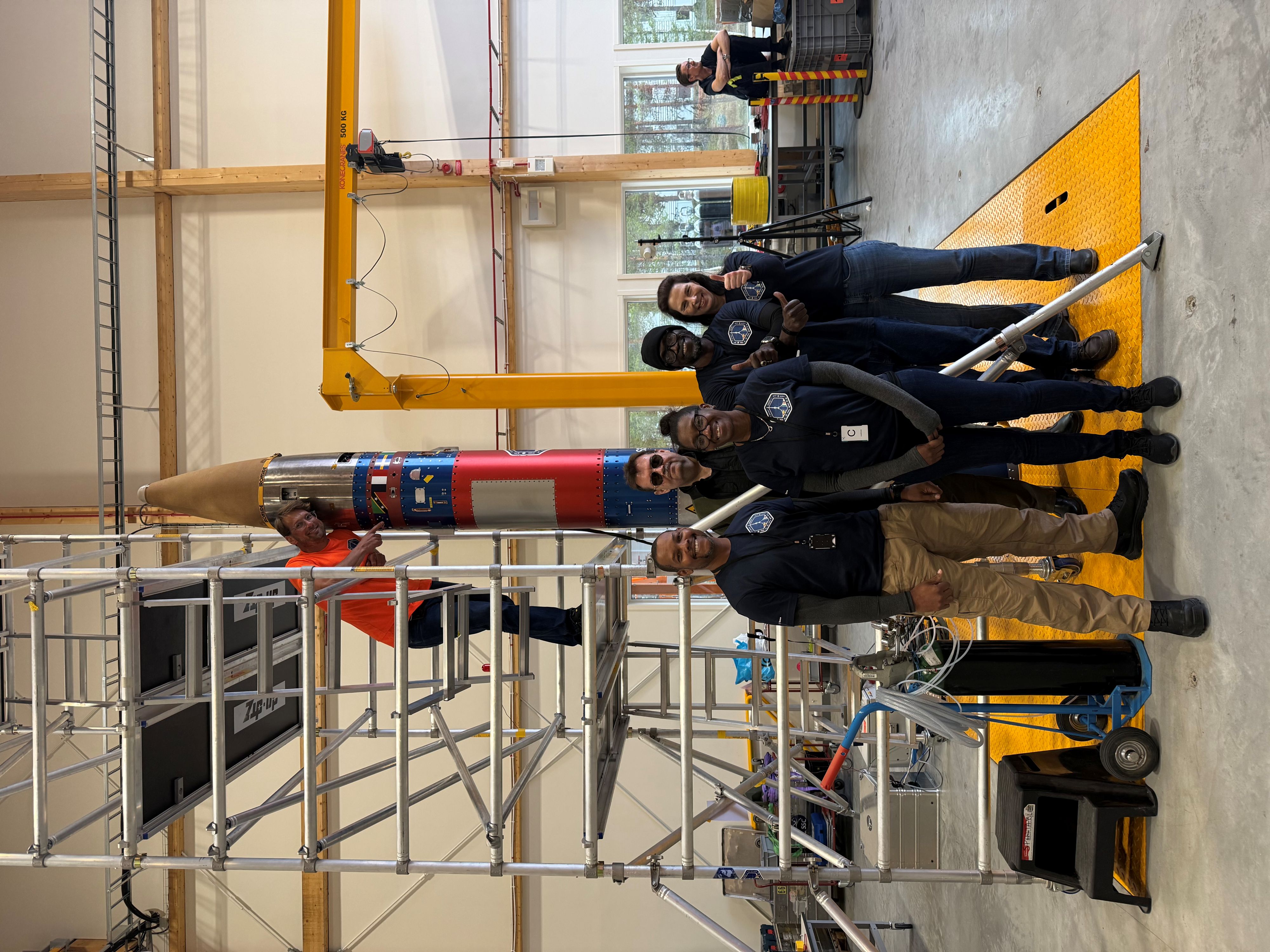
CARISPACE team in front of the payload cone: (left to right) John Williams, Prof. Dr. Dr. Oliver Ullrich, Rholda Brathwaite, Richard Galloway, Dr. Cora Thiel (source: G. Florin)
Caribbean–Swiss partnership launches space biology experiment to advance STEM education, research capacity, and international collaboration.
ZURICH, ZURICH, SWITZERLAND, May 31, 2026 /EINPresswire.com/ -- On 31 May 2026, at 8:33 am CEST, from Esrange Space Center in Kiruna, Sweden, the SSC SubOrbital Express S1X-5 / M17 mission was launched, carrying a historic endeavor: a space life sciences experiment from St. Kitts and Nevis and Switzerland, developed through a partnership between the Ministry of Education Nevis and the University of Zurich and the Center for Space and Aviation Switzerland and Liechtenstein (CSA).Strengthening STEM Education and Capacity Building in Nevis
This mission represents a critical stage of a strategic effort by the Ministry of Education Nevis to strengthen teaching and learning in STEM and to better align education with real-world application. Central to this strategy is the development of teacher capacity, the enhancement of learning resources, and the creation of meaningful pathways that connect classroom instruction with authentic scientific and technological experiences. Recognizing that examinations alone cannot fully capture competence, the Ministry has prioritized initiatives that foster relevance, adaptability, and practical skills among both teachers and students.
A key component of this approach has been the establishment of strong local, regional, and international partnerships. The collaboration with the University of Zurich (UZH) and the Center for Space and Aviation Switzerland and Liechtenstein (CSA) stands out as a flagship initiative, offering mutual benefits through shared expertise, research innovation, and educational development. For Nevis and the wider Federation of St. Kitts and Nevis, the partnership provides unprecedented access to advanced scientific research, training, and global networks. For UZH and CSA, it expands the scope of international collaboration and supports the inclusion of emerging space-participating nations in meaningful scientific contributions.
At the outset of the project, four science teachers from Nevis were selected to work alongside leading scientists, including Prof. Dr. Dr. Oliver Ullrich and Dr. Cora Thiel, to design and implement a real-world space life sciences experiment. Over the past two years, the project has progressed through multiple phases, including in-person and virtual training, guided experimental development, and continuous skills enhancement. Teachers and students alike have been exposed to authentic scientific processes, including observing preparations for the FRAM-2 orbital mission aboard SpaceX in 2025.
Importantly, the initiative has also strengthened local infrastructure and collaboration. The establishment of a cell culture laboratory at the Nevis Sixth Form College, along with the local development of flight-ready hardware involving teachers, students, and technical experts, reflects a deliberate effort to build sustainable scientific capacity within the federation. The current suborbital mission at Esrange Space Center represents the execution phase of this work, translating classroom learning and collaborative research into a tangible spaceflight experiment.
identification gravity-sensitive regulatory elements in human cells
This study investigates how altered gravity reshapes genome architecture and gene regulation in human immune cells. Building on earlier findings that gene activity can change within seconds during parabolic flight, we examine whether these rapid responses represent reversible adaptation or persistent molecular alterations relevant to astronaut health during long-duration missions. We will profile gene expression and genomic regulation under microgravity and hypergravity, and integrate these data with multi-day in-flight results from the orbital Fram2 mission conducted in April 2025. By comparing immediate, sustained, and post-flight molecular states, the study aims to identify gravity-sensitive regulatory signatures, define their temporal stability, and determine which immune-cell processes remain durably primed after spaceflight.
A new space nation
Strategically, it places St. Kitts and Nevis on the global map of space-using nations, with the first scientific experiment from the Caribbean region conducted in space. Through its partnership with CSA, the project also creates a gateway to the rapidly developing New Space Economy and opens new opportunities for international collaboration in research, education, and technological innovation.
Prof. Dr. Dr. Oliver Ullrich
Center for Space and Aviation Switzerland and Liechtenstein
oliver.ullrich@uzh.ch
Visit us on social media:
Other
Legal Disclaimer:
EIN Presswire provides this news content "as is" without warranty of any kind. We do not accept any responsibility or liability for the accuracy, content, images, videos, licenses, completeness, legality, or reliability of the information contained in this article. If you have any complaints or copyright issues related to this article, kindly contact the author above.
