

Biosensors Market Size to Lead USD 64.54 Billion By 2035 Rising Demand for Real-time Diagnostics Drives the Market
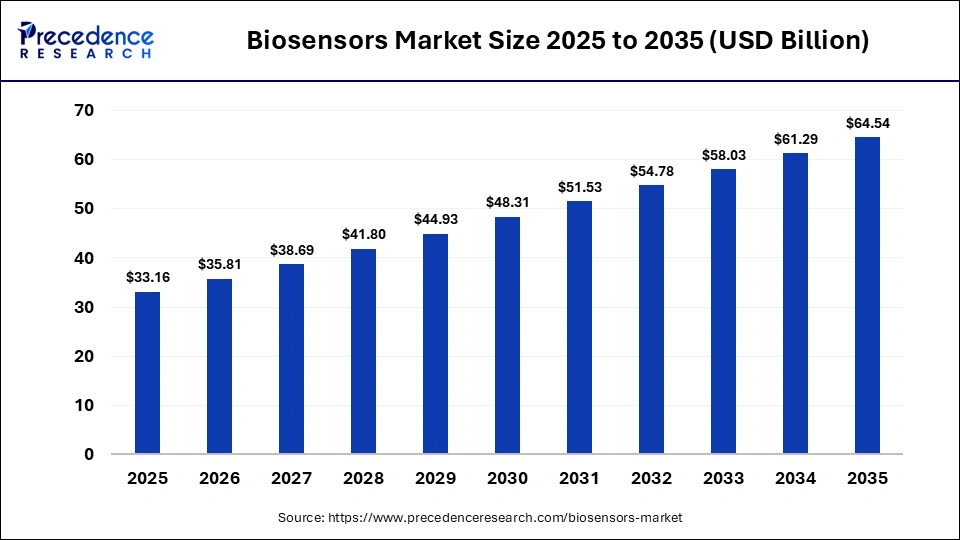
According to Precedence Research, the global biosensors market size is estimated to reach nearly USD 64.54 billion by 2035, increasing from USD 35.81 billion in 2026, growing at a strong CAGR of 6.89% from 2026 to 2035.
Ottawa, March 02, 2026 (GLOBE NEWSWIRE) -- Rising demand for rapid, real-time diagnostics and continuous health monitoring is significantly driving the growth of the Biosensors Market.
What is the Biosensors Market Size in 2026?
The global biosensors market size is valued at USD 35.81 billion in 2026 and is expected to be worth USD 64.54 billion by 2035, with a robust CAGR of 6.89% from 2026 to 2035. The ongoing technological innovations in miniaturization are the key factor driving market growth. Also, the increasing need for food safety monitoring, coupled with the rising incidence of chronic diseases, can fuel market growth further.
The Complete Study is Now Available for Immediate Access | Download the Sample Pages of this Report@ https://www.precedenceresearch.com/sample/1674
Key Highlights of the Biosensors Market
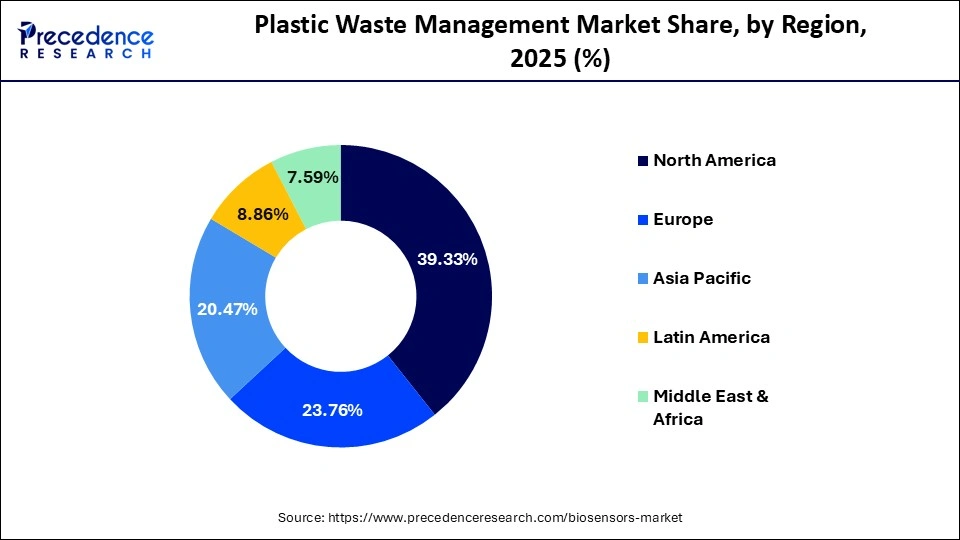
- North America dominated the biosensors market share of 39.33% in 2025 with the largest revenue share, while the Asia Pacific is expected to grow at the fastest CAGR during the forecast period.
- By technology, the optical biosensors segment is projected to experience the highest growth rate in the market between 2026 and 2035.
- By application, the agriculture segment is set to experience the fastest rate of market growth from 2026 to 2035.
- By End User, the food industry segment is anticipated to grow with the highest CAGR in the market during the studied years.
Global Biosensors Market Revenue, by Technology, 2023 to 2025 (USD Million)
| Technology | 2023 | 2024 | 2025 |
| Thermal | 2,123.40 | 2,296.84 | 2,485.05 |
| Electrochemical | 19,977.59 | 21,523.09 | 23,193.77 |
| Piezoelectric | 1,601.13 | 1,721.54 | 1,851.45 |
| Optical | 4,742.07 | 5,164.63 | 5,625.63 |
Global Biosensors Market Revenue, by Application, 2023 to 2025 (USD Million)
| Application | 2023 | 2024 | 2025 |
| Medical | 18,677.15 | 20,202.69 | 21,858.13 |
| Food Toxicity | 1,193.59 | 1,285.93 | 1,385.75 |
| Bioreactor | 1,875.45 | 2,016.49 | 2,168.66 |
| Agriculture | 2,936.61 | 3,189.15 | 3,464.25 |
| Environment | 2,483.76 | 2,692.00 | 2,918.40 |
| Others | 1,277.64 | 1,319.84 | 1,360.71 |
Global Biosensors Market Revenue, by End Use, 2023 to 2025 (USD Million)
| End Use | 2023 | 2024 | 2025 |
| Home Healthcare Disgnostics | 5,700.62 | 6,160.09 | 6,658.20 |
| PoC Testing | 13,369.92 | 14,476.40 | 15,678.25 |
| Food Industry | 2,170.88 | 2,355.23 | 2,555.85 |
| Research Laboratories | 3,405.23 | 3,661.32 | 3,937.61 |
| Security & Biodefense | 3,797.56 | 4,053.07 | 4,325.99 |
The increasing need for Point-of-Care Testing is Helpful for the Growth of the Biosensors Market
The market is fuelled by the increasing need for point-of-care (POC) assays, particularly in the healthcare sector. These sensors enable more accurate, rapid, and portable assays, crucial for monitoring chronic diseases and controlling other conditions. In addition, rapid technological innovations in biochemistry and nanotechnology are fuelling market growth further.
Rising Research Momentum in Plant Biosensors and Emerging Wearable Plant Sensing Technologies

An analysis of Scopus-indexed publications shows a steady rise in research on plant sensing technologies, with a noticeable difference in growth between traditional plant biosensors and wearable plant monitoring sensors. Between 2015 and 2025, studies on plant biosensors increased consistently from just over 132 publications in 2015 to about 356 in 2024 indicating the growing maturity of biochemical and electrochemical sensing methods for plant diagnostics. Meanwhile, wearable sensors for plant monitoring remain a smaller but fast-growing area, expanding from fewer than five publications per year before 2018 to nearly 60 papers in 2024.
This trend closely reflects the findings of Singh et al. (2026), who highlight wearable platforms such as plant tattoos, flexible wraps, and microneedle arrays as the next major step in plant sensing innovation. The growing focus on AI- and machine learning–enabled nanobiosensors further signals a shift from lab-based analysis to real-time, in-field monitoring, positioning wearable plant sensors as an important driver of precision and sustainable agriculture, despite their still limited representation in current research.
Combining Biosensors with IoT and AI Technologies Is Fuelling Market Expansion
The market is rapidly experiencing growth with the integration of Artificial Intelligence (AI) and Internet of Things (IoT) platforms. This merger improves the real-time monitoring capabilities of biosensors, which makes data collection more effective and efficient. Furthermore, this trend is anticipated to boost innovation and increase the application of biosensors in different sectors.
➡️ Become a valued research partner with us ☎ https://www.precedenceresearch.com/schedule-meeting
New Trends in the Biosensors Market
- AI-driven biosensors are moving beyond simple detection to predictive analytics. These algorithms can process real-time data to detect early deviations in health, like glucose spikes or cardiac events, before they occur.
- There is also an increase in demand for non-invasive wearables such as tattoos, smart rings, and skin patches that monitor biomarkers in sweat, interstitial fluid, and saliva.
- The use of nanomaterials like carbon nanotubes and graphene is improving sensor sensitivity, enabling the identification of analytes at the single-molecule level.
Built for leaders who move markets. Access live, actionable intelligence with Precedence Q. https://www.precedenceresearch.com/precedenceq/
Biosensors Market Dynamics
What are the growth Drivers of the Biosensors Market?
The ongoing enhancements in bioprocess monitoring, particularly in pharmaceuticals and biotechnology, are expected to impact positive market growth soon. In addition, real-time monitoring of bioreactor processes enhances the efficiency and accuracy of fermentation, cell culture, and biotechnological applications, leading to further market expansion.
High Development & Manufacturing Costs Hampering the Growth of the Market
Cutting-edge biosensors generally necessitate costly materials such as graphene or gold nanoparticles and a complex fabrication process, which makes them less accessible in a price-compliant market. Moreover, many biosensors depend on biological elements that generally degrade over time, which leads to poor shelf stability, hindering market growth shortly.
Financial Government Support Positively Impacting Market Growth
Government initiatives and support for research and development are the crucial factors creating lucrative opportunities in the market. These investments aim to enhance biosensor functionality, affordability, and accuracy. Furthermore, rising public awareness regarding health and wellness is fuelling the adoption of biosensor-enabled devices, which will impact positive market growth soon.
Get informed with deep-dive intelligence on AI’s market impact https://www.precedenceresearch.com/ai-precedence
Biosensors Market Insights
| Report Metrics | Details |
| Market Size in 2025 | USD 33.16 Billion |
| Market Size in 2026 | USD 35.81 Billion |
| Market Size by 2035 | USD 64.54 Billion |
| Market Growth (2026 – 2035) | 6.89% CAGR |
| Dominating Region | North America |
| Base Year | 2025 |
| Forecast Period | 2026 to 2035 |
| Segments Covered | Technology, Application, End User, Type, and Region |
| Regions Covered | North America, Europe, Asia-Pacific, Latin America, and Middle East & Africa |
Access the Full Biosensors Market Study@ https://www.precedenceresearch.com/biosensors-market
Regional Insights
North America dominated the market with the largest share in 2025. The dominance of the region can be attributed to the increasing demand for real-time monitoring, strong R&D initiatives, and supportive regulatory environments. In addition, ongoing collaboration between private companies, academic institutions, and research organizations is driving regional growth in the near future.
How Big is the Size of U.S. Biosensors Market in 2026?
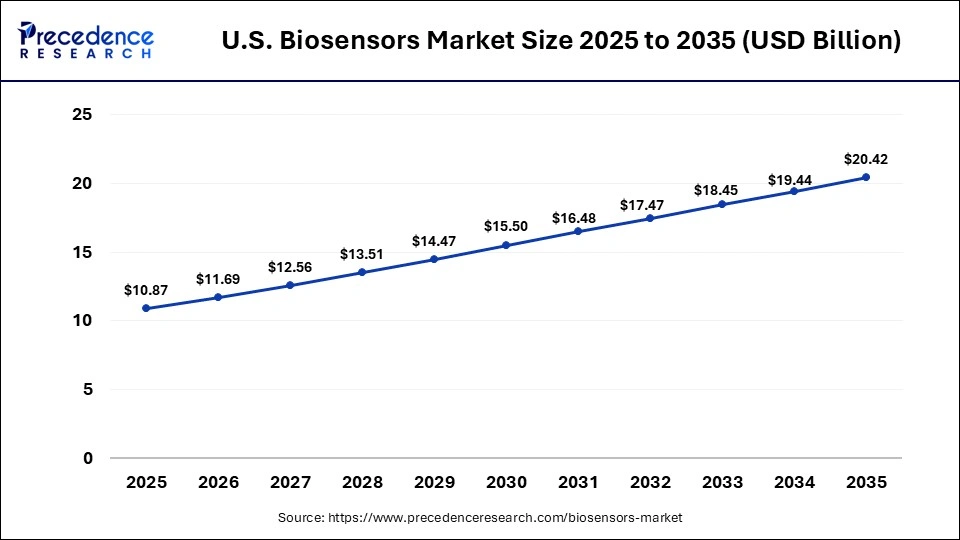
According to Precedence Research, the U.S. biosensors market size is valued at USD 11.69 billion in 2026 and is predicted to reach around USD 64.54 billion by 2035, growing at a significant CAGR of 6.89% from 2026 to 2035.
Try Before You Buy – Get the Sample Report@ https://www.precedenceresearch.com/sample/1674
Asia Pacific is expected to grow at the fastest CAGR during the forecast period. The growth of the region can be driven by the growing adoption of wearable health devices and point-of-care diagnostics, coupled with the surge in healthcare spending in China and India. Furthermore, rising investment in digital health, biotechnology, and smart hospitals is contributing to market growth in the foreseeable future.
Europe is expected to grow at a notable CAGR over the forecast period. The growth of the region can be credited to the increasing emphasis on personalized medicine, strong healthcare facilities, and substantial investments in R&D.Moreover, the need for accurate and rapid diagnostics in hospital and home care settings is facilitating the market towards point-of-care testing solutions.
Biosensors Market Segmental Analysis
Technology Insights
In 2025, the electrochemical segment dominated the biosensors market, largely due to its established reliability, affordability, and versatility across multiple applications. Electrochemical biosensors are widely employed in medical diagnostics, environmental monitoring, and food testing because they can efficiently convert biological responses into measurable electrical signals. Their sensitivity, rapid response times, and ability to be miniaturized for portable devices have further solidified their market position.
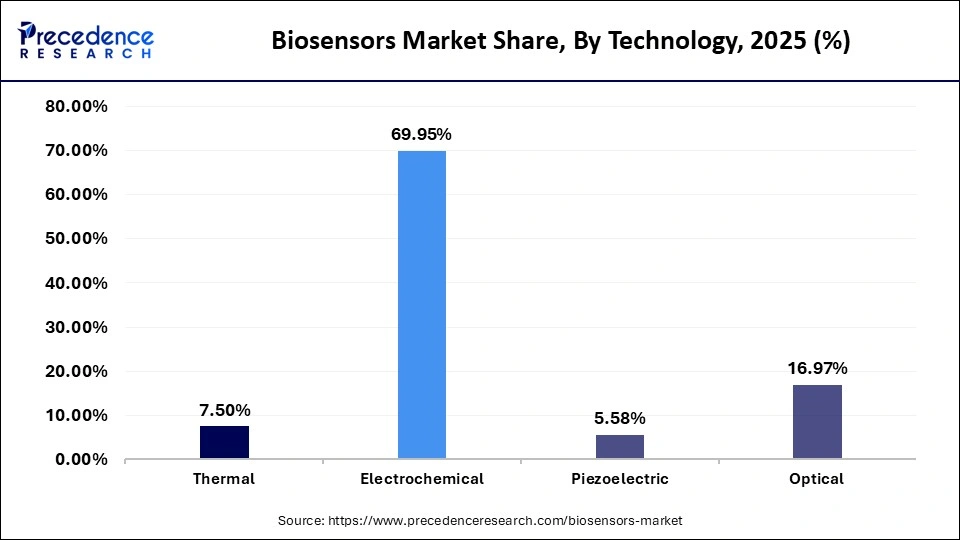
The optimal biosensors segment is expected to grow at the fastest CAGR over the forecast period. The growth of the segment can be attributed to the rapid innovations in miniaturization technology and its better sensitivity in various applications. In addition, these sensors are increasingly being used to detect pathogens, contaminants, and toxins in the food sector, driving segment growth further. This surge is driven by rapid advancements in miniaturization technologies and enhanced sensitivity, which allow these biosensors to detect even trace amounts of pathogens, toxins, and contaminants. Their adaptability for diverse applications, including food safety and environmental monitoring, has made them increasingly critical in sectors demanding high precision and reliability.
Application Insights
The medical segment held the largest share of the biosensors market in 2025, reflecting the widespread use of these devices in diagnostics, patient monitoring, and disease detection. Biosensors in healthcare enable rapid, accurate, and real-time monitoring of biomarkers, glucose levels, and infectious diseases, enhancing patient care and supporting early intervention strategies.
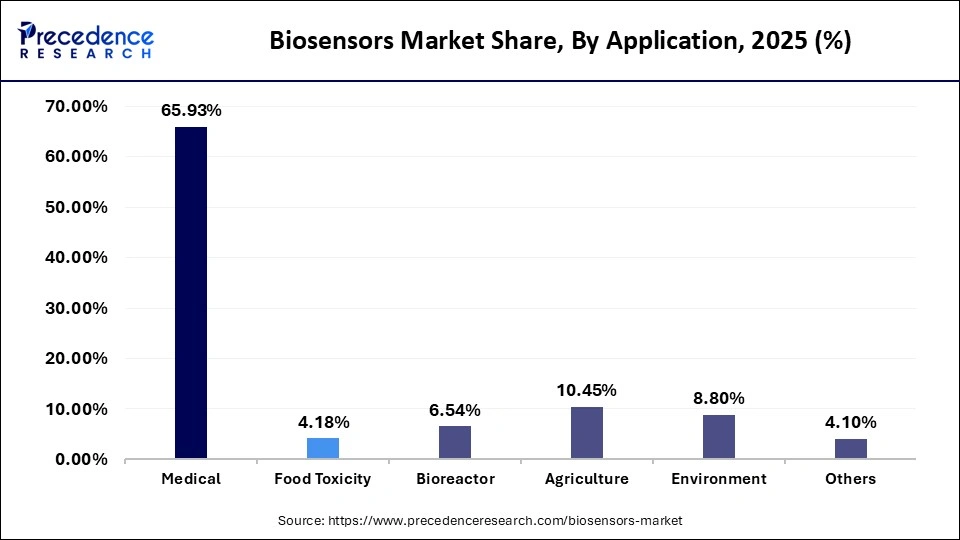
The agriculture segment is expected to grow at the fastest CAGR over the forecast period. The growth of the segment can be credited to the growing need for pathogen detection, soil nutrient monitoring, and pesticide reduction. Moreover, a surge in investment in agricultural research and rising awareness among farmers about the benefits of technology can fuel market growth soon. Increased investment in agricultural research, coupled with rising awareness among farmers about the benefits of precision farming and biosensor-enabled monitoring, is expected to drive adoption. Biosensors in agriculture help optimize crop yields, reduce chemical usage, and improve overall farm productivity, positioning this segment as a key growth area.
End User Insight
Point-of-care (PoC) testing was the leading end-user segment in 2025, reflecting the increasing emphasis on decentralized diagnostics and rapid testing solutions. PoC biosensors provide quick and accurate results without the need for centralized laboratory infrastructure, making them highly valuable in clinical, home, and remote settings.
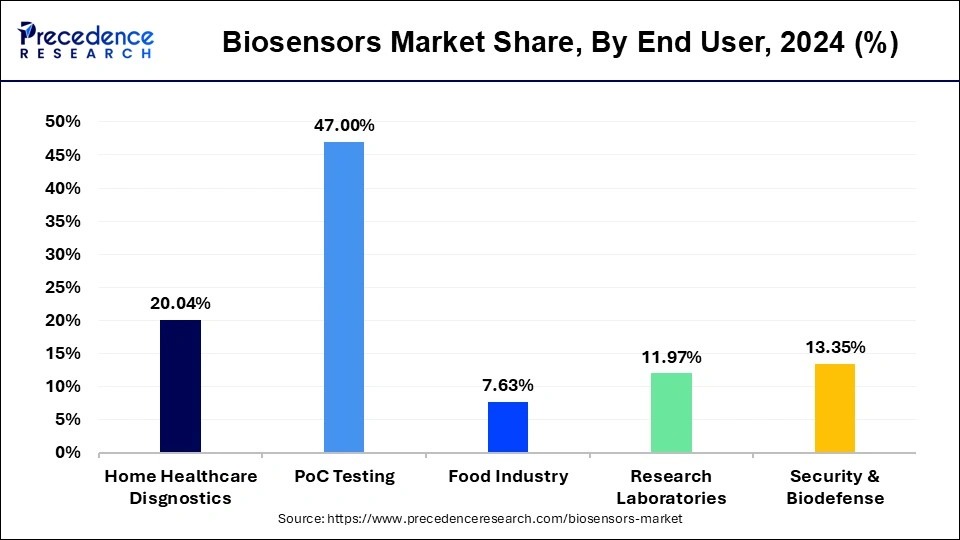
The food industry segment is expected to grow at the fastest CAGR during the projected period. The growth of the segment can be driven by ongoing innovations in nanotechnology and IoT, coupled with the growing consumer emphasis on nutritional analysis, food safety, and allergen detection. Furthermore, biosensors are used to monitor food freshness and identify spoilage markers to ensure high quality in packaged products. Biosensors are being increasingly utilized to track freshness, detect spoilage markers, and maintain quality control in packaged foods. As consumers demand higher transparency and safety in their food products, the integration of biosensors in the food industry is becoming essential for both regulatory compliance and market competitiveness.
You can place an order or ask any questions. Please feel free to contact us at sales@precedenceresearch.com | +1 804 441 9344
✚ Related Topics You May Find Useful:
➡️ Non-Invasive Biosensors Market: Explore how painless sensing technologies are revolutionizing real-time health monitoring and diagnostics
➡️ Point-of-Care Biosensors Market: Discover trends driving rapid diagnostics closer to patients and clinical settings
➡️ Glucose Biosensors Market: Understand advances in diabetes management through smart glucose monitoring solutions
➡️ Synthetic Biosensors Market: Gain insights into engineered sensor platforms for enhanced specificity and performance
➡️ IoT Sensors Market: Analyze how connected sensing devices are powering smart infrastructure and Industry 4.0
➡️ Wireless Brain Sensors Market: Track innovations in neurotechnology enabling wireless monitoring and brain-computer interfaces
➡️ Sensor Market: Examine global demand across industries for sensing technologies driving automation and data analytics
➡️ Smart Sensors Market: Discover how intelligent sensors with processing capabilities are advancing autonomous systems and IoT
Biosensors Market Top Companies
- Bio-Rad Laboratories Inc.
- Abbott Laboratories
- Biosensors International Group Ltd.
- DuPont Biosensor Materials
- Pinnacle Technologies Inc.
- Johnson & Johnson
- Molecular Devices Corporation
- QTL Biodetection LLC
- TDK Corporation
- Zimmer & Peacock AS
Recent Developments in the Biosensors Market
- In April 2025, iolinq raised $100 million in a Series C round to fund the U.S. regulatory approval and market launch of its autonomous intradermal glucose sensor. Alpha Wave Ventures led the investment, with participation from existing backers including Features Capital, Hikma Ventures, and Taisho Pharmaceutical.
Segments Covered in the Report
By Technology
- Thermal
- Electrochemical
- Piezoelectric
- Optical
By Application
- Medical
- Cholesterol
- Blood glucose
- Blood gas analyzer
- Pregnancy testing
- Drug discovery
- Infectious disease
- Food Toxicity
- Bioreactor
- Agriculture
- Environment
- Others
By End User
- Home Healthcare Diagnostics
- PoC Testing
- Food Industry
- Research Laboratories
- Security and Bio-defense
By Region
- North America
- Europe
- Asia Pacific
- Latin America
- Middle East & Africa
Thank you for reading. You can also get individual chapter-wise sections or region-wise report versions, such as North America, Europe, or Asia Pacific.
Immediate Delivery Available | Buy This Premium Research Report@ https://www.precedenceresearch.com/checkout/1674
You can place an order or ask any questions, please feel free to contact at sales@precedenceresearch.com | +1 804 441 9344
Stay Ahead with Precedence Research Subscriptions
Unlock exclusive access to powerful market intelligence, real-time data, and forward-looking insights, tailored to your business. From trend tracking to competitive analysis, our subscription plans keep you informed, agile, and ahead of the curve.
Browse Our Subscription Plans@ https://www.precedenceresearch.com/get-a-subscription
About Us
Precedence Research is a worldwide market research and consulting organization. We give an unmatched nature of offering to our customers present all around the globe across industry verticals. Precedence Research has expertise in giving deep-dive market insight along with market intelligence to our customers spread crosswise over various undertakings. We are obliged to serve our different client base present over the enterprises of medicinal services, healthcare, innovation, next-gen technologies, semi-conductors, chemicals, automotive, and aerospace & defense, among different ventures present globally.
Web: https://www.precedenceresearch.com
Our Trusted Data Partners:
Towards Healthcare | Towards Packaging | Towards Chem and Materials | Towards FnB | Statifacts | Nova One Advisor | Market Stats Insight
Get Recent News:
https://www.precedenceresearch.com/news
For the Latest Update Follow Us:
LinkedIn | Medium | Facebook | Twitter


Legal Disclaimer:
EIN Presswire provides this news content "as is" without warranty of any kind. We do not accept any responsibility or liability for the accuracy, content, images, videos, licenses, completeness, legality, or reliability of the information contained in this article. If you have any complaints or copyright issues related to this article, kindly contact the author above.
